Oh, bin ich dämlich! Ich musste soeben herzlich lachen, als ich mir unvermittelt meiner Dummheit gewahr wurde. Ich habe mein Hirn dabei erwischt, wie es Dinge verknüpfte, die sich nicht verknüpfen lassen. Gemeinhin nennt man das einen Fehler. Mein Hirn (wie wohl jedes?) knüpft unentwegt Verbindungen zwischen Dingen. Das ist manchmal sinnvoll, wenn ich zum Beispiel Worte in “die richtige” Reihenfolge bringe. So, dass die Worte Sinn ergeben – oder zumindest wohl klingen. Aber oft genug mögen meine Worte wohl klingen, aber sie machen nicht wirklich Sinn, denn sie lassen sich nicht mit der Welt verknüpfen.
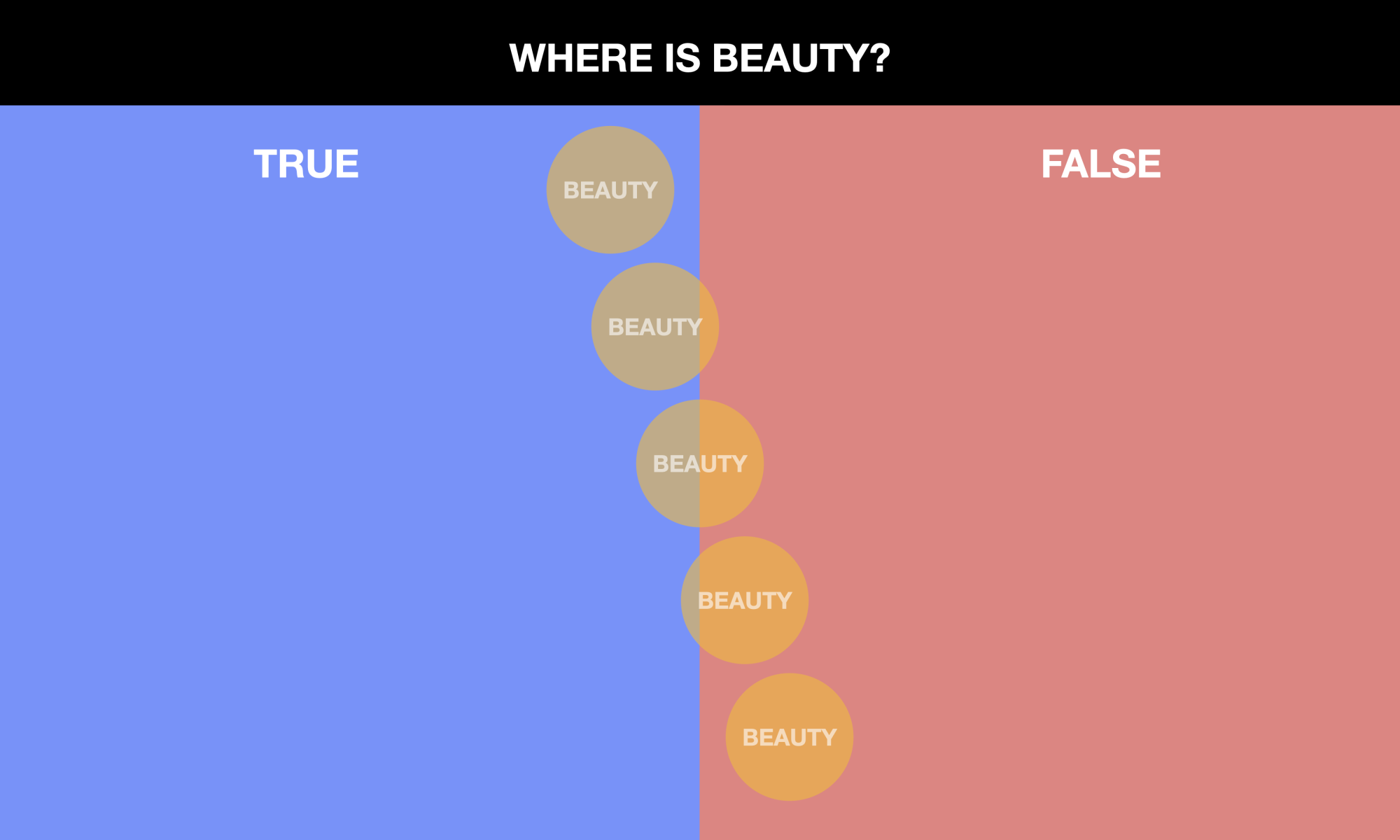
Und damit ergibt sich die Antwort auf die erste Frage, die da lautet: Sind wohlklingende Worte immer wahr? Die Antwort, da dürfte allgemein Einigkeit herrschen, ist – nein. Worte müssen nicht wahr sein, auch wenn sie schön klingen. Diese Erfahrung hat bestimmt schon jeder gemacht, zumindest seit der Erfindung der Reklame.
Die zweite Frage ist hingegen viel schwieriger zu beantworten und ich währe sehr an anderen Perspektiven interessiert: Wie ist es mit wahren Worten? Müssen wahre Worte immer auch schön sein? Um diese Frage zu untersuchen, müssen wir zuerst genauer definieren was an dieser Stelle mit “schön” gemeint ist. Schön nicht aus der Betrachtung des Augenblicks, denn wahren Worte sind oft erschreckend. Von Schönheit würde man eigentlich nicht erwarten, sich davor zu erschrecken. Mit Schönheit muss also hier die Schönheit gemeint sein, die von einem wahren Satz ausgeht, wenn man den Satz in der Betrachtung der Vergangenheit, im historischen Kontext ausspricht, weit weg von jeglicher emotionaler Nähe.
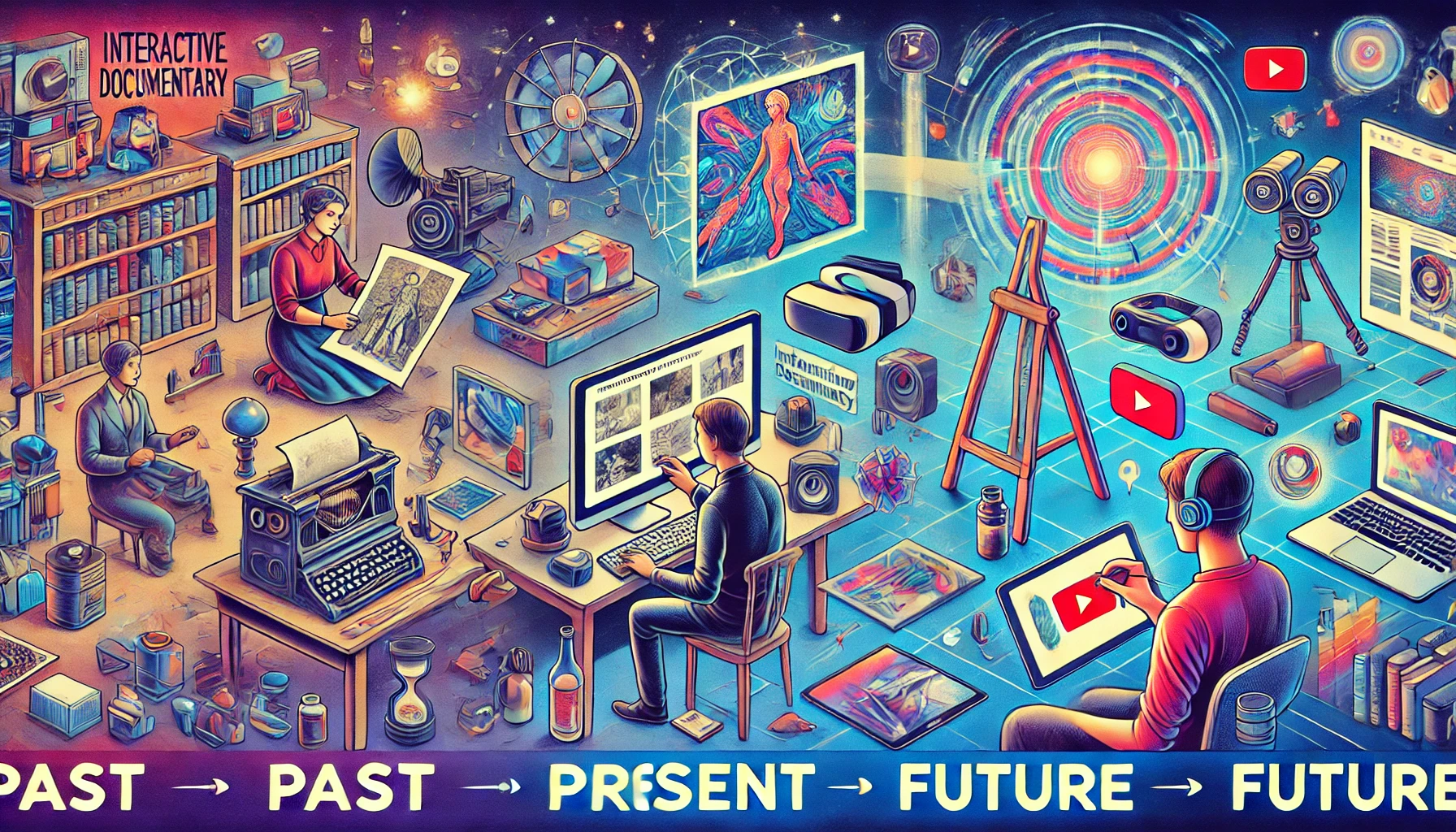
Interaktiver Dokumentarfilm: Vergangenheit, Gegenwart und Zukunft
Seit 1997 beschäftige ich mich mit dem, was wir heute als interaktiven Dokumentarfilm kennen. Zehn Jahre später erfuhr ich, dass meine Arbeiten in dieses Genre fielen, lange bevor der Begriff selbst existierte.
Interaktive Dokumentarfilme gab es für mich also schon, bevor es den Begriff gab. Und ich bin überzeugt, dass es diese Form weiterhin geben wird, selbst wenn der Begriff eines Tages in Vergessenheit gerät – ähnlich wie der Begriff “Multimedia” inzwischen historisch ist, obwohl das Konzept dahinter weiterlebt.
Die Zukunft des Interaktiven Dokumentarfilms
Wie könnte dieser “interaktive Dokumentarfilm” der Zukunft aussehen? Können wir ihn heute schon erkennen? Ja, das können wir. Ein Blick auf YouTube zeigt die bereits verwirklichte Zukunft des interaktiven Dokumentarfilms. Einzelne Videoclips, sogenannte SNUs (Smallest Narrative Units), werden durch Algorithmen miteinander verknüpft. Diese Methode, die ich seit 25 Jahren anwende, mag heute alltäglich erscheinen, doch für frühere Generationen war sie in einem Massenmedium undenkbar. Diese neue Art, Informationseinheiten zu verbinden, hat das Potenzial, unser Denken zu beeinflussen.
Mustererkennung und Multiperspektivität
Auf YouTube sehe ich, wie viele Menschen beginnen, bestimmte Zusammenhänge zu erkennen – Zusammenhänge, die ich durch meine Arbeit im interaktiven Dokumentarfilm ebenfalls entdeckt habe. Es geht darum, Muster zu erkennen, in denen mehrere, oft widersprüchliche Geschichten gleichzeitig existieren. Wo viele nur eine einzige Wahrheit sehen, erkennen andere den Wert aller widersprüchlichen Geschichten, die zusammen ein vollständiges Bild ergeben. Dieses Bild ist komplex, aber nicht unverständlich; manche Muster sind sogar ziemlich eindeutig.
Meine These
Das was ich “Korsakowianische Praxis” nenne, hat einen verstärkenden Einfluss auf das multiperspektivische Denken einer Gesellschaft. Indem wir lernen, verschiedene narrative Stränge zu erkennen und zu verknüpfen, entwickeln wir ein tieferes Verständnis für die Komplexität der Welt und die Vielzahl der Geschichten, die sie formen.
In diesem Sinne lebt der interaktive Dokumentarfilm weiter – in neuen Formen, auf neuen Plattformen und mit ähnlichen Methoden. Und er wird den Blick auf unsere Welt erweitern und vertiefen.
Interactive Documentary: Past, Present, and Future
Since 1997, I have been engaged with what we now call interactive documentary. Ten years later, I learned that my work had always fallen into this genre, long before the term itself existed.
Interactive documentaries, for me, existed even before the term was coined. And I am convinced that this form will continue to exist, even if the term eventually fades into obscurity—much like the term “multimedia” is now historical, though the concept it describes persists.
The Future of Interactive Documentary
What could the “interactive documentary” of the future look like? Can we already see it today? Yes, we can. A glance at YouTube reveals the realized future of the interactive documentary. Individual video clips, known as SNUs (Smallest Narrative Units), are linked together by algorithms. This method, which I have been using for 25 years, may seem commonplace today, but for previous generations, it was unthinkable in a mass medium. This new way of connecting information units has the potential to influence our thinking.
Pattern Recognition and Multiperspectivity
On YouTube, I see many people beginning to recognize certain connections—connections that I have also discovered through my work in interactive documentary. It’s about identifying patterns in which multiple, often contradictory, stories coexist. Where many see only a single truth, others recognize the value of all the conflicting stories that together form a complete picture. This picture is complex but not incomprehensible; some patterns are even quite clear.
My Thesis
What I call “Korsakowian practice” has an amplifying effect on the multiperspective thinking of a society. By learning to recognize and connect various narrative threads, we develop a deeper understanding of the world’s complexity and the multitude of stories that shape it.
In this sense, the interactive documentary lives on—in new forms, on new platforms, and with similar methods. And it will continue to broaden and deepen our view of the world.
Gerade bin ich zufällig auf ein 10 Jahre altes Interview gestoßen, dass ich, nachdem ich es damals pflichtbewußt (die Dokumentation nimmt der Künstler ernst) auf YouTube geladen hatte und danach vergaß. Ich wusste damals schon, dass sich für dieses Video kaum jemand interessieren würde, und so war es dann ja auch. Und irgendwie war mir das Video auch ein wenig unangenehm, weil ich blöd aussah und vor allem, weil ich es wieder nicht hinbekommen hatte dieses seltsame Ding zu erklären, das an sich so simple ist, viel simpler jedenfalls als der Quatsch, mit dem sich die Leute das Leben versauten. Ausserdem sah es uncool aus, dieses klischeehafte auf Fernsehen gemachte Studio, in dem ich jedem unerträglich gschaftelhuberisch rüberkommen musst, der nicht kapierte, über was um himmels Willen ich da redete. Und so richtig kapiert, worüber ich da geredet habe hat es (ich dramatisiere) wohl nur ein Mensch auf der Welt und das war ich.
Ich verstehe immer noch, was ich sagen wollte. Es ist alles richtig. Nur wenn ich meine Meinung zum besten gebe, und über irgendwas spreche, was dieses Ding nicht war (über Film, Innovation, Akademie), da redete ich Unsinn, aber das waren ja auch alles Bereiche, in denen ich mich nicht auskannte. Aber alles was ich über dieses Software-Ding zu sagen hatte Hand und Fuß. Das kann ich heute mit größerer Autorität sagen, nachdem ich mir über dieses Ding nun weitere 10 Jahre lang den Kopf zerbrochen habe.
Davor war ich Filmemacher, aber ich habe mit dem Filmemachen so gut wie aufgehört weil es mehr Spass machte darüber nachzudenken, was dieses Software-Ding ist, dieses “tool for thought” (Aston 2016, Wiehl 2016, Rheingold 2000), bei dem sich die Gelehrten darüber streiten, wer auf diesen Begriff in diesem Zusammenhang als erster gekommen ist. Bitcoin ist ein “Tool for Thought”, das versteht jeder Bitcoiner sofort; YouTube ist ein “Tool for Thought”, das versteht jeder, der YouTube vollumfänglich nutzt, das Internet ist ein “Tool for Thought”, das versteht jeder, der sich selbst beim Denken beobachtet; Film ist ein “Tool for Thought”, Kino, Podcasts, die Liste liesse sich verlängern, so lange bis alle Erfindungen der Menschheitsgeschichte aufgelistet sind. So weit wollen wir nicht gehen. Man sieht, ich verzettle mich auch heute noch oft, komme vom 100sten ins 1000ste, weil alles mit allem verknüpft ist, verstehen Sie, jetzt, worauf ich hinaus will?
Instead of summarizing my paper, I would like to take the opportunity to react to the other presentations in this panel from a Korsakowian perspective, which is the focus of my research. By doing so, I aim to provide insights into my research and offer solutions to the problem described in the presentation by Umer Bilal and Manuel Contreras, which I would summarize as follows:
There is substantial criticism of the Western gaze in documentary filmmaking, and rightly so. The issues highlighted by Umer and Manuel indicate that documentaries, both past and present, often portray a distorted image of reality. They rightly argue that some individuals in the West act as gatekeepers, controlling the production and dissemination of images. Umer and Manuel point out that the lack of funding plays a major role in perpetuating this problem.
Sonali Sharma presents a case study of an artist who uses Instagram as a platform to share his perspective on a particular aspect of the world—his observations and comments on the Delhi metro.
I am a 52-year-old human ape, and I have struggled with the issue of distorted perspectives since I developed an interest in documentaries over 25 years ago. In response to this struggle, I developed Korsakow, a system that shares similarities with Instagram, such as the tagging system that Sonali described. In Korsakow, tags are called “keywords” and play a central role. At that time, I had to create my own tool as Instagram or YouTube were not available. These tools now allow for different strategies of ordering and sense-making, moving away from linear storytelling forms.
I generally agree with the points presented and would like to offer a concrete idea to address the problem of under-complex and mono-perspectival views on people and societies in the Global South. To explain this idea, I would like to conduct a playful thought experiment and invent a fictional character named Jan.
Jan is a 26-year-old who lives in Delhi, Karachi, or Bogotá. He understands that the images of the world presented in the media are often wrong, distorted, or incomplete. Jan considers becoming a documentary maker and thinks about attending a film school to learn the craft, write proposals for funders, and build a network within the industry. If Jan asked me for advice, it could trigger the following thoughts:
If Jan follows the traditional path of attending film school and learning to navigate the system, he will likely become the kind of documentary maker the market has learned to value. He will produce media products that align with the perspectives of those willing to pay for them. As Bilal and Contreras note, if Jan does not adhere to the “Western gaze” formula, he will likely lack the resources to continue his work.
So, what can a young person do when they see the problem of distorted reality and want to improve it? What could be a feasible path?
I think that at this particular point in time, there are numerous opportunities. I would like to connect two seemingly unrelated fields. First, as Sonali Sharma exemplifies, the internet and platforms like Instagram or YouTube (which I have studied much more deeply) offer possibilities to reach people without dealing with the old gatekeepers mentioned by Bilal and Contreras.
My solution might sound laughable or ridiculous to some, and if it does, I invite you to take it as a joke. But maybe there is a young future documentary maker who can sense the path and just needs a bit of encouragement from an old ape like me.
My suggestion to Jan: Don’t go to film school, art school, or university. Take the money it would cost and invest it in Bitcoin. Use the time you would spend at film school to learn everything about films using the internet and available tools. Study film history, theory, and practice. I recommend YouTube as a place to find some of the best teachers, no matter where you are. Learn about films and also study the workings and philosophy of Bitcoin, which will teach you about how people come to their perception of reality. Don’t trust old or even new knowledge blindly—Think through everything you recognize as relevant, use your own brain. Don’t trust, verify.
Use online platforms to conduct your own experiments. This hands-on experience will teach you a lot. There are many students like you out there doing the same, and you can learn from them as well and you can learn and experience how to think collaboratively. When you are finished with your curriculum after lets say four years Bitcoin should be ready and provide you with the funding you need.